
Boards in. Systems out.
From PCBA to a tested, labelled, packed product — enclosures, wire harnesses, firmware flashing, serialization and kitting on the same campus as the lines that fed them.
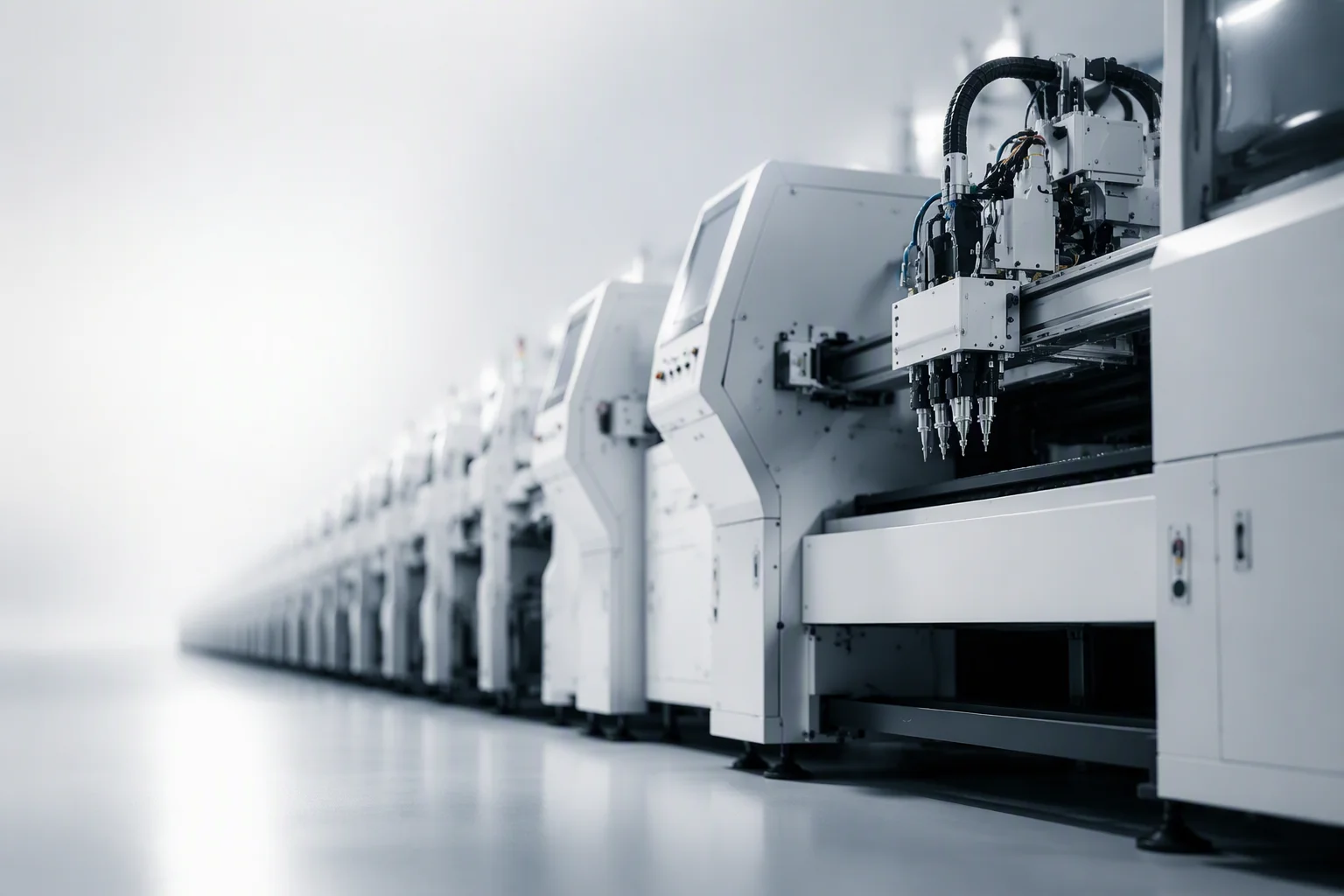
The SMT line is the start, not the finish.
Metalwork, harness benches, flashing bays and test rigs sit around the nine SMT lines, so a system’s sub-assemblies never leave the fence. One build order, one quality hand, one stop — the 45,000 m² campus in Bao’an with 500+ people doing the walking. A box build fails at the seams, so the seams are where the checks live: panel fit, torque, cable routing and ground continuity, signed off by the same QC log that released the board.
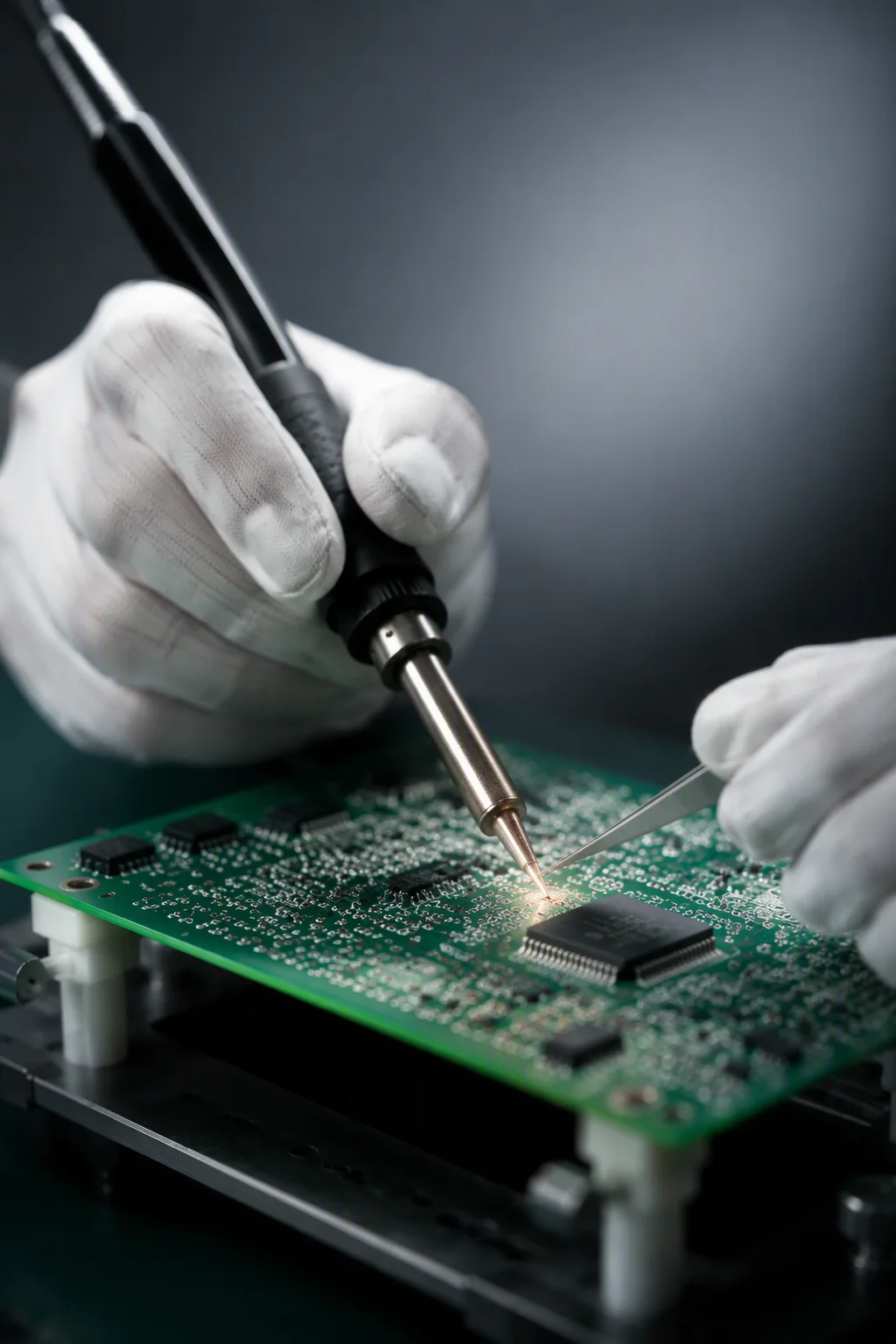
Hand work is part of the process, not the workaround.
Press-fit, torque, panel-to-chassis grounding, connector seating — the jobs cameras cannot judge. Each station runs the way the QC log demands: ESD mats verified, torque tools calibrated, an image captured per operation so the report survives the box.
Stations scale to the order: one early system for validation, or a rack’s worth a day. Before shrink wrap, the system itself gets a run — diagnostics, boot cycle, I/O check and the firmware version read back from the unit, so what leaves the campus is what the test record says it is.
Batch prototypes start from 1–100 pcs and step up with the same checklist, not a looser one.
See the factory floorWhat happens after SMT
Once the board passes its gate, the system work is a chain of small, verifiable operations — each one inside the fence and each one booked against the same build order as the PCB it holds.
Sheet metal & panels
In-network metalwork from RackForge — sheet metal, machined parts and painted panels to your drawing, built around the electronics.
Learn more HarnessWire harness & cabling
Loomed to the assembly drawing, continuity-checked before install, strain relief and seals per the enclosure cadence.
Learn more FirmwareFirmware flashing
Image, MAC addresses and license keys loaded on the line and locked to the unit serial before it reaches the pack station.
Learn more SerializationSerialization & labels
Serial numbers, barcodes and market labels applied at build and scanned into the packing record — no unbranded units leaving.
Learn more KittingSpares & accessory kits
Service kits, spare parts and accessory packs prepared against your BOM, with the packing slip generated from the same record.
Learn more Direct shipOrder-ready dispatch
Palletized or single-piece shipments straight from the campus to your warehouse — or your customer’s door, on FOB, CIF or DDP.
Learn moreSend one RFQ.
Boards, schematics and a box concept — systems engineering replies within 24–48 hours with a toleranced BOM, test plan and build quote.
Request a quote