EMS–TRADE Electronics export trading
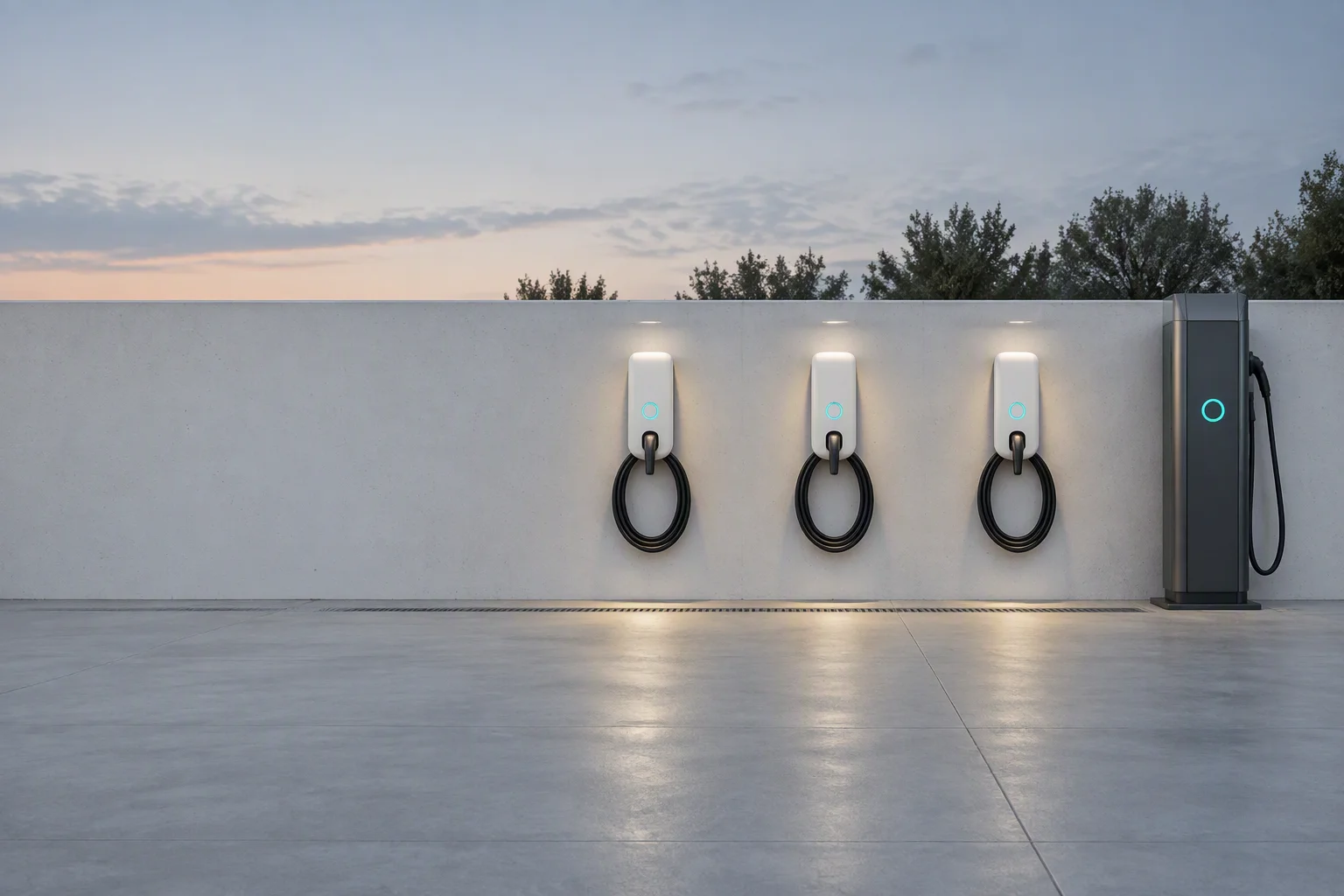
A row of finished charging equipment on a concrete apron at dusk, with three slim AC wallboxes and a taller DC fast-charging cabinet

Industry · Group B · three supplier sites · Shenzhen

EV charging & energy storage

The hardware is the easy part. The grid code of the country you install in, and the rules that let a lithium cell travel, decide the sale.

Battery rack
5.12–30.72kWh
Wall-mounted, stackable and rack-cabinet LiFePO4 capacity across the range
Charging range
7.4–360kW
AC wallboxes 7.4–22 kW and DC fast chargers 30–360 kW
Module efficiency
96.5%
Peak efficiency published for the in-house SiC charging modules
PV factory
2GW+
Annual module capacity, trading since 2012, with OEM and ODM branding

01Pain points · what decides the programme

Four things that decide whether the hardware can be installed.

33 tests−35/+55 °CUN 38.3Rebate ladder

Including one policy ladder, because it is announced and dated rather than forecast.

01
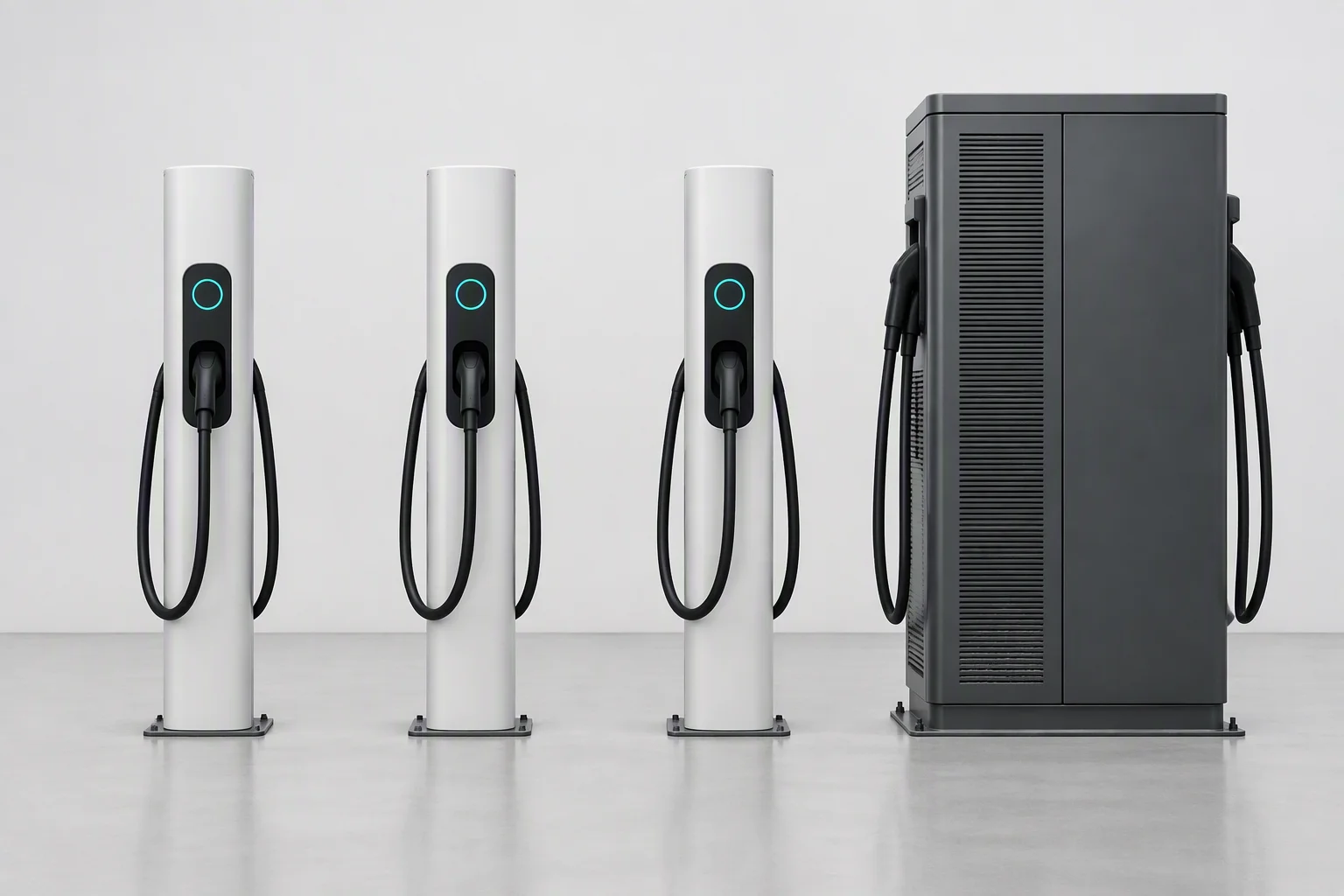
Finished EV charging pillars with connector holsters beside one taller DC fast-charging cabinet
Field reliability is the whole business case 33 environmental and thermal-shock tests from −35 °C to +55 °C, with charging modules at 96.5% peak efficiency. ems-charge, published
02
A blank unmarked form on a clipboard with abstract ruled lines and empty tick boxes
Certification is fragmented by country 134,403 CB certificates were issued in 2025 across 54 countries and 94 national bodies. A CB certificate is an input, never the national approval. IECEE
03
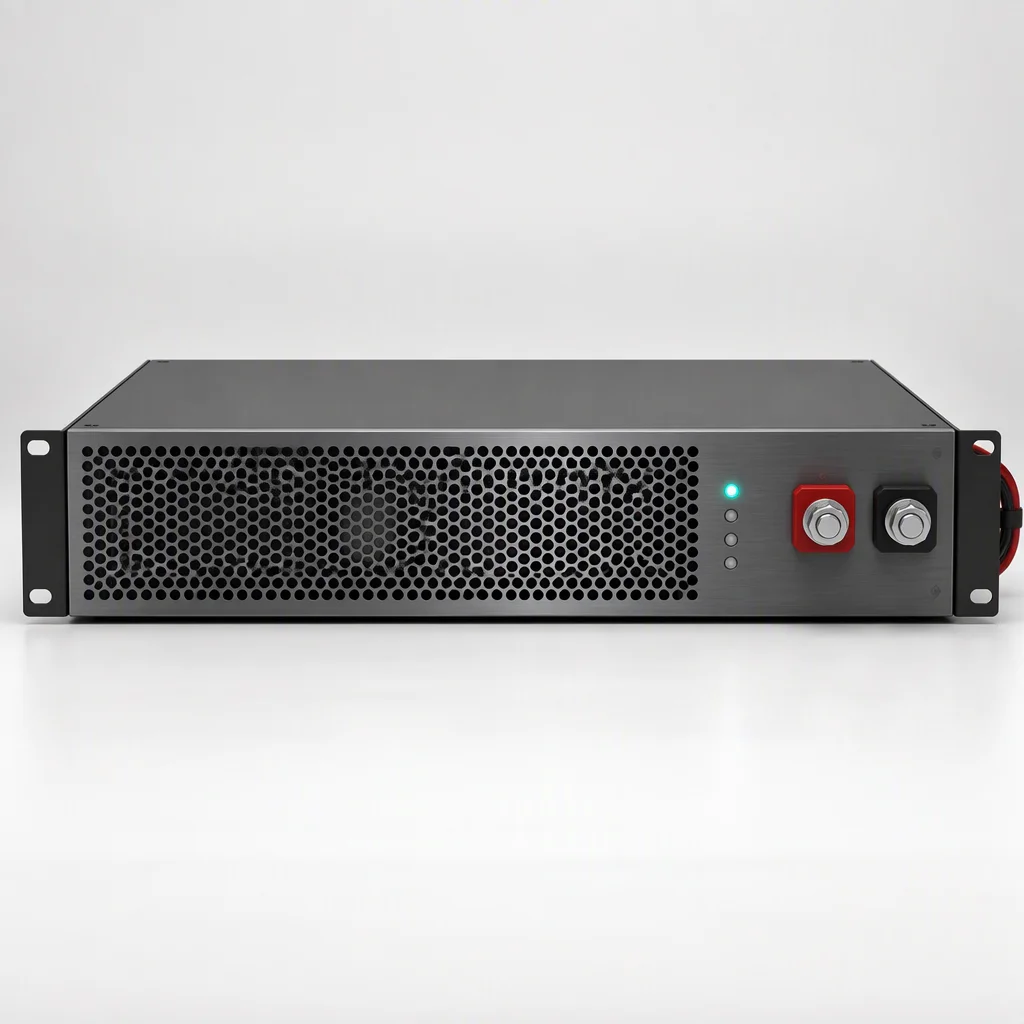
A finished rack battery backup unit with a perforated front grille and heavy DC terminals
Cells cannot travel as ordinary freight UN 38.3 reports and MSDS, with UN3480, UN3481, UN3090 and UN3091 markings and 20 Wh cell, 100 Wh battery thresholds. 49 CFR 173.185
04
A container terminal yard at first light with parallel rows of identical containers receding into pale haze
Policy moves the price inside an order cycle The battery export rebate ladder steps 13% to 9% to 6% to 0% between 2024-12-01 and 2027-01-01. Solar modules reach 0% on 2026-04-01. Announced policy steps

02Technical requirements · written into the spec

Cycle life, grid codes and the vehicle interface.

IEC 62109-1/-2IEC 61851-1ISO 15118OCPP 2.0.1

The country you install in decides which grid code applies. No single product covers every market.

What the specification has to fix, and against which document
ParameterValueBasis
Storage10 ms UPS-class switchover10,000 cycle life at 100% DOD, 0.2C at 25 °C, with 5-year product and 10-year performance warranty.
Storage capacity5.12–30.72 kWh expandableWall-mounted, stackable and rack-cabinet formats at 24 / 48 / 51.2 V and 100 Ah.
Grid interfaceIEC 62109-1 and -2Power conversion safety, with VDE-AR-N 4105, G99 and EN 50549 for grid connection by market.
ChargingIEC 61851-1 · ISO 15118Vehicle interface; OCPP 2.0.1 for the back office; UL 2594, UL 2202 and UL 2231 for North America.
ModulesTOPCon 430–720 W · HJT to 730 W26.1% cell efficiency, 84.95% bifaciality, 900+ modules per 40' HC container, with IEC 61215, IEC 61730 and IEC 62941.
Traceability100% EL imaging plus IV flashThe final flash test is stored against each module's serial number, so a claim traces to the module, not the pallet.
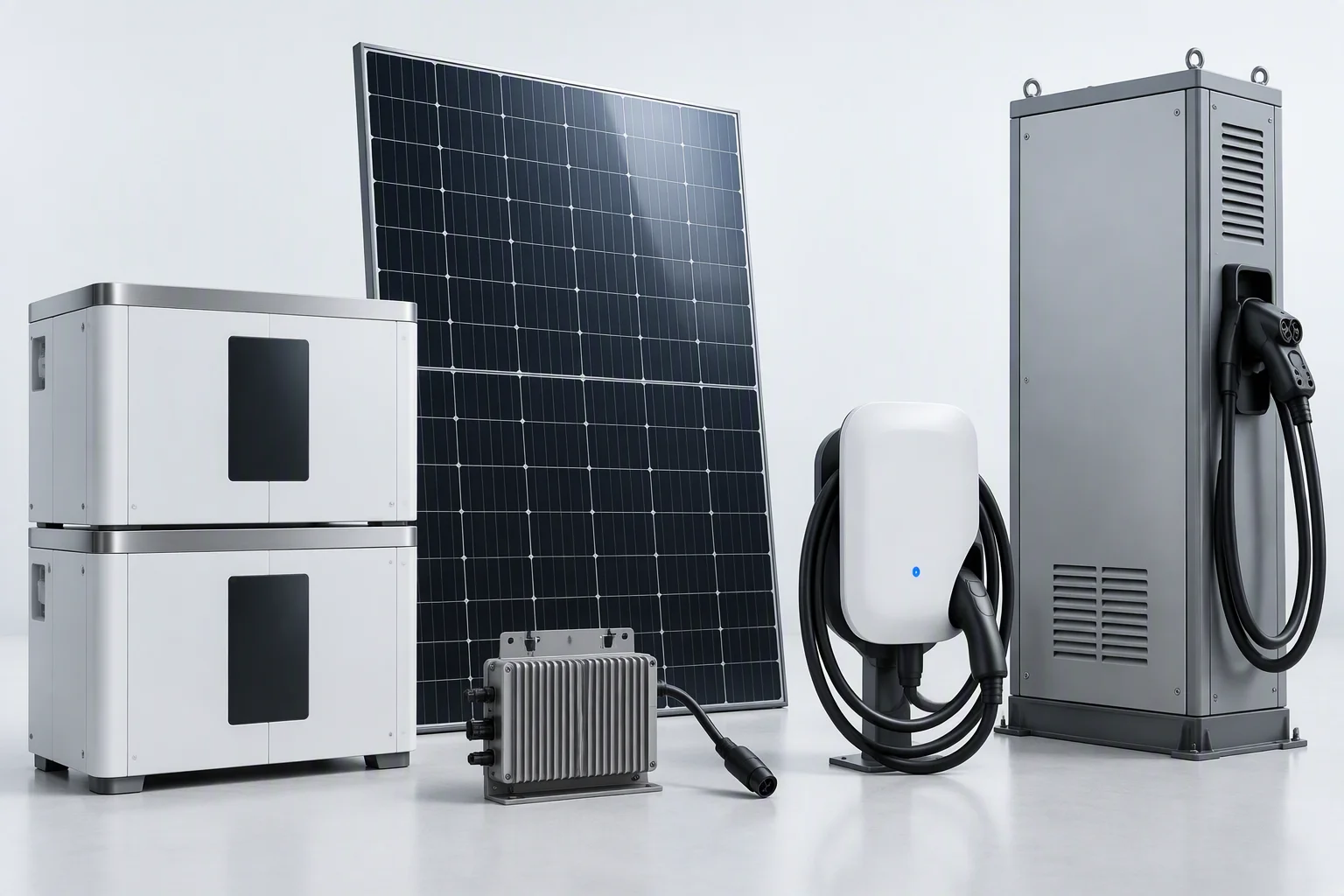
A new-energy line-up: stackable storage units, one bifacial solar module, an inverter box, an AC wallbox and a DC charger cabinet
Fig. 01The interfaces are where projects slip. The inverter's grid code, the battery's cycle life and the charger's back-end protocol have to agree before a site is energised.
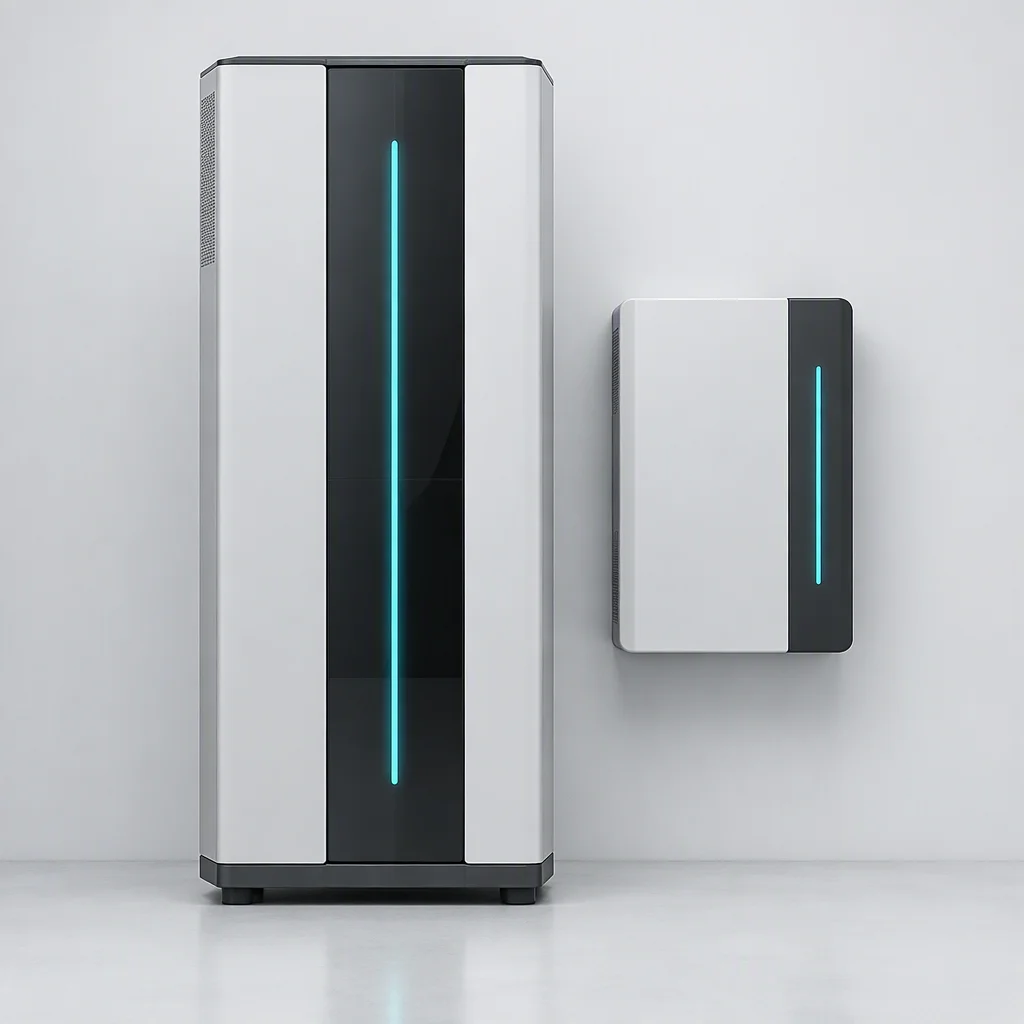
A finished cabinet battery storage unit beside a wall-mounted home storage unit
Fig. 02Cycle life is quoted at a depth of discharge. A full-DOD figure and a softened 80% figure describe the same cell and different warranties.
01
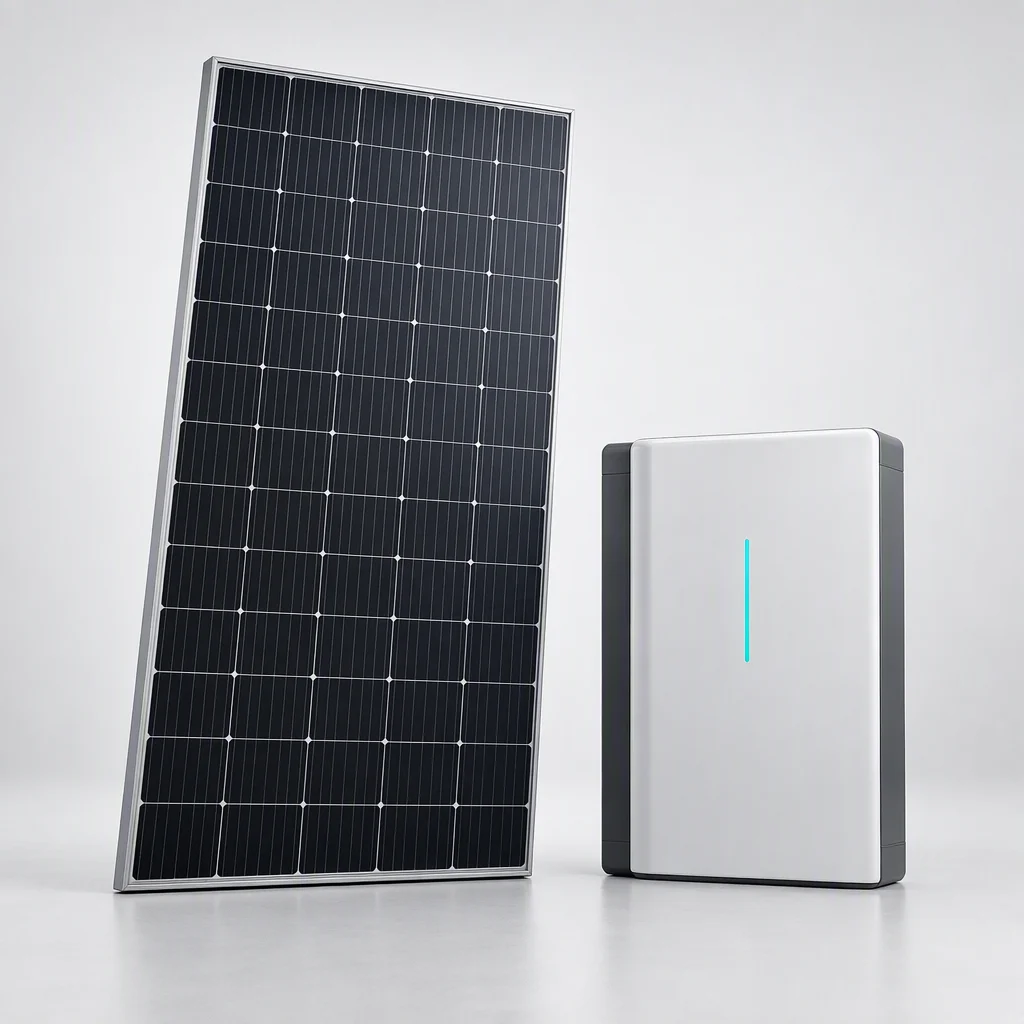
A finished bifacial dual-glass solar module standing upright beside a wall-mounted home battery cabinet
The grid code is national Germany, Great Britain and the rest of Europe each require a different document set before a site can be connected.
02
A finished rack battery backup unit with a perforated front grille and heavy DC terminals
Standalone cells change the shipment Packs inside equipment and packs shipped loose are different declarations, different markings and often a different forwarder.
03
Three slim AC charging wallboxes with coiled cables and one taller graphite DC fast-charging cabinet
The back office is a specification A charger without a protocol your platform speaks is a charger you cannot bill from.
04
Stackable storage units, a bifacial solar module, an inverter box and a DC charger cabinet staged in one line
Module data follows the serial Electroluminescence imaging and the final flash test are stored per module, so a warranty claim traces to one unit.

03Connection layer · what we supply

Storage, generation and charging from three Group B sites.

Group B · 3 sitesEach independently operated

Storage, generation and charging can be quoted together, which makes the interfaces one party's problem instead of three.

A finished cabinet battery storage unit beside a wall-mounted home storage unit B-01

EMS-ESS — LiFePO4 storage

5.12–30.72 kWh 10 ms switchover 10,000 cycles at 100% DOD Microinverters 400–1600 W

Group B · 5 + 10 year product and performance warranty, distribution in 20+ countries

A finished bifacial dual-glass solar module standing upright beside a wall-mounted home battery cabinet B-02

EMS-SOLAR — TOPCon & HJT modules

26.1% cell efficiency 84.95% bifaciality 900+ per 40' HC Serial-level flash data

Group B · 2 GW+ annual capacity, trading since 2012, with OEM and ODM branding

Three slim AC charging wallboxes with coiled cables and one taller graphite DC fast-charging cabinet B-03

ems-charge — AC and DC charging

AC 7.4–22 kW DC 30–360 kW 96.5% module peak MOQ 1 unit

Group B · OCPP 2.0.1 platform, 48-hour quote; partner's published reference: 650+ chargers across 95 sites, operator unnamed

04Trust layer · standards that apply

Each mark stated for exactly what it is.

No holder namesNo certificate numbersNo bare CE claim
01
A blank unmarked form on a clipboard with abstract ruled lines and empty tick boxes
CE is a declaration with a technical file The European Commission states the mark does not mean the product has been approved as safe. A voluntary certificate from a body that is not a notified body carries no weight in market surveillance.
02
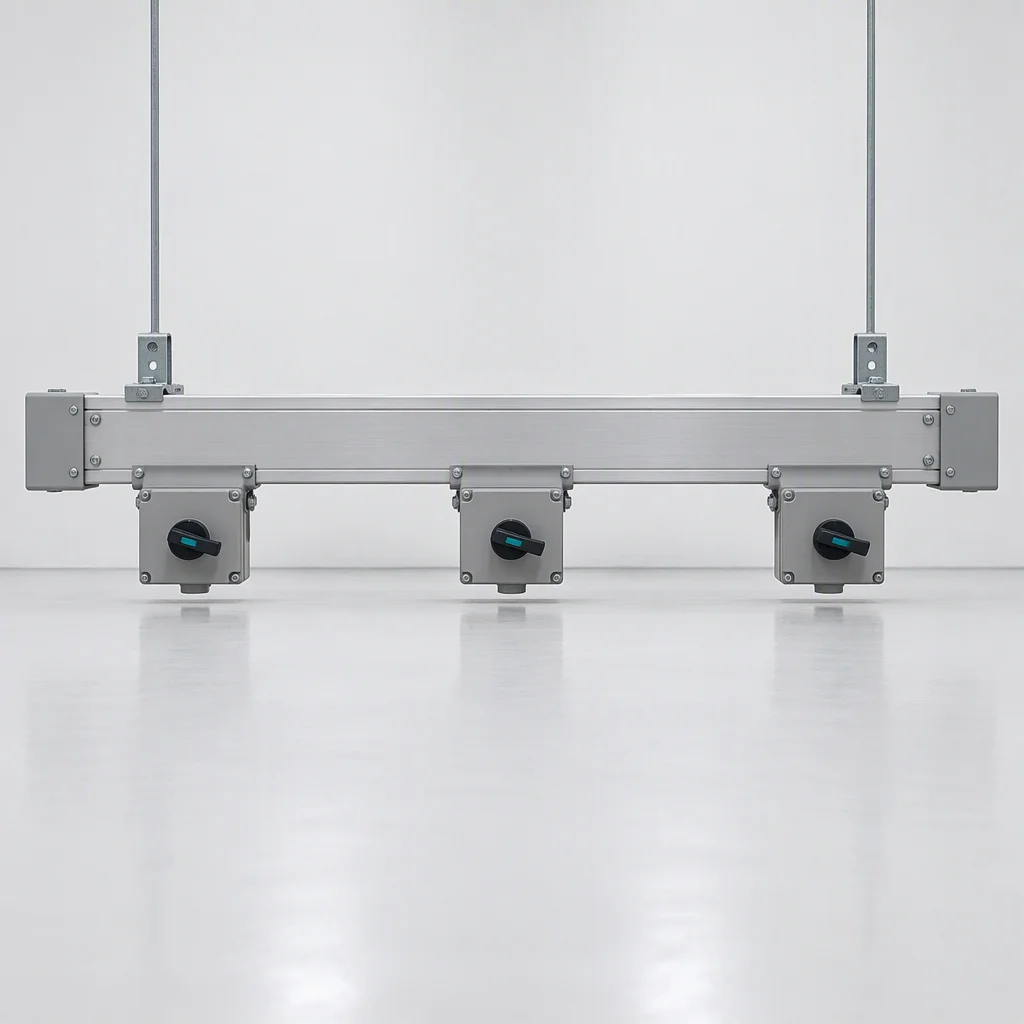
A finished busway run with three tap-off boxes and rotary breaker handles, suspended on brackets
RoHS is a directive, not a mark Ten substances restricted: cadmium at 0.01%, the other nine at 0.1% in homogeneous materials, with the technical file kept for ten years.
03
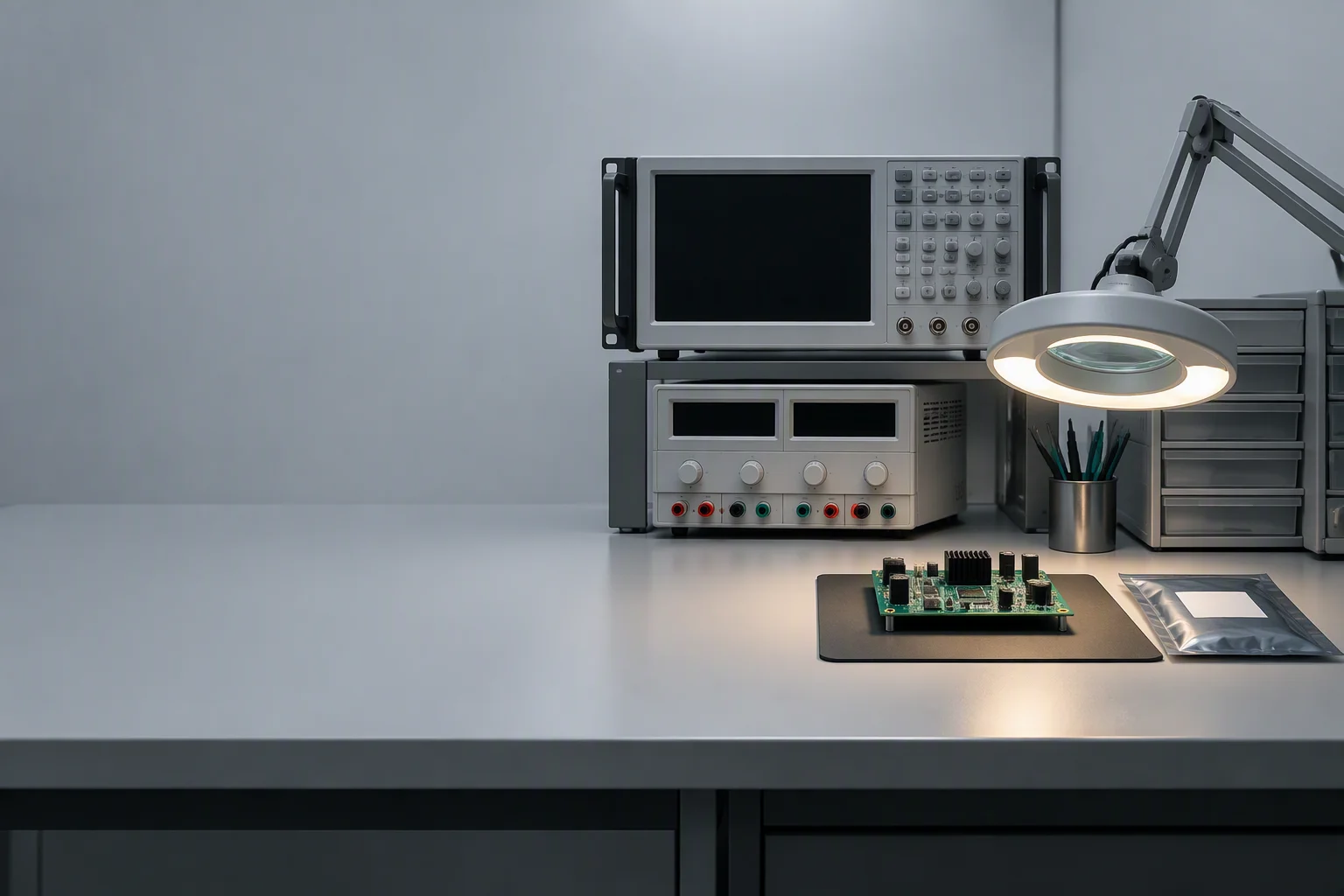
A technical scope document beside a board sample on a pale bench under even light
REACH has no mark and no certificate The obligation is information: above 0.1% w/w an SVHC must be declared to the buyer, and consumer enquiries answered within 45 days.
04
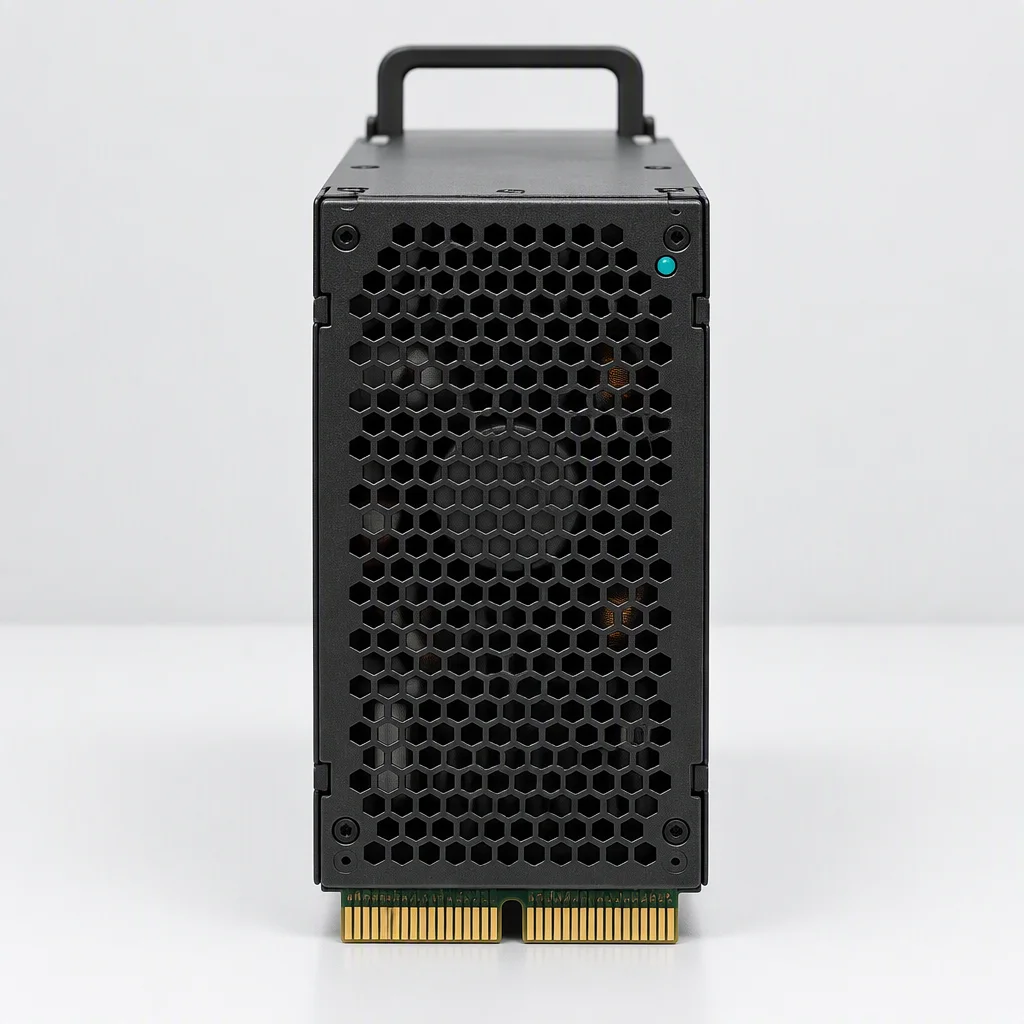
A finished CRPS server power supply module with a perforated intake face and a gold edge connector
A CB certificate is an input, not an approval 134,403 CB certificates were issued in 2025 across 54 countries, 94 national bodies and 577 laboratories. National marks still have to be obtained.
05
A finished rack battery backup unit with a perforated front grille and heavy DC terminals
Batteries carry a separate regulation EU 2023/1542 adds carbon footprint, recycled content, battery passport and due diligence on top of transport testing.
06
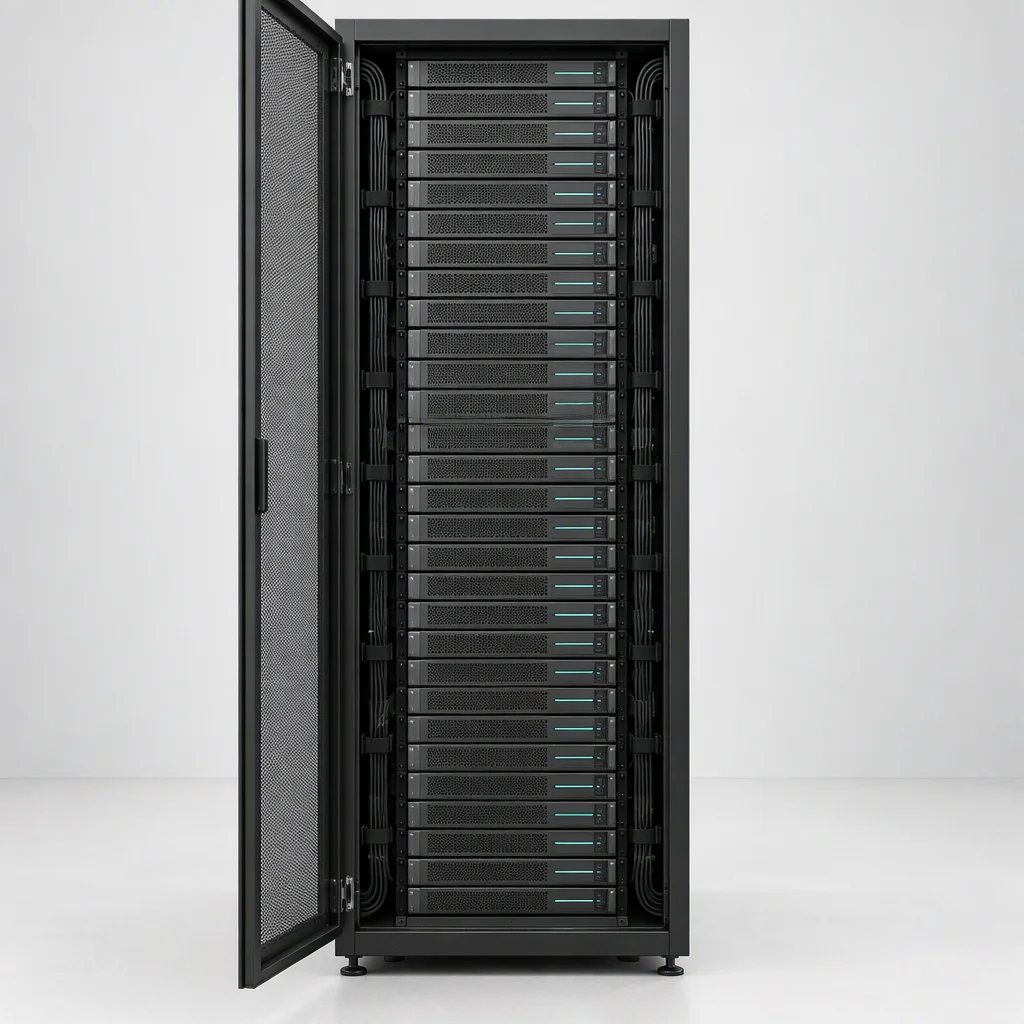
A finished 48U AI server rack with its door open, filled with identical closed 1U units
Coverage, counted rather than claimed Of the 24 partner sites, 12 list ISO 9001, 15 list RoHS and 15 list CE, read on 13 September 2026.

05Programme archetype · anonymised

Three shapes of programme, no names attached.

10,000 cycles33-test envelopeSerial-level flash data
A
A finished cabinet battery storage unit beside a wall-mounted home storage unit
Residential storage on a full-DOD cell 5.12–30.72 kWh expandable storage with 10 ms UPS-class switchover, specified against IEC 62109-1/-2 and the destination grid code.
B
Three slim AC charging wallboxes with coiled cables and one taller graphite DC fast-charging cabinet
Charging programme on a 33-test envelope AC and DC chargers with SiC modules at 96.5% peak efficiency, qualified from −35 °C to +55 °C, entering at MOQ 1 unit.
C
A finished bifacial dual-glass solar module standing upright beside a wall-mounted home battery cabinet
Module programme on serial-level data TOPCon and HJT modules with 100% EL imaging and the final IV flash test stored against each serial, so a claim traces to one module.

06Programme archetype · how to read them

Archetypes, not references.

Published product dataNo customer namedNo client logo
01
A finished CRPS server power supply module with a perforated intake face and a gold edge connector
Where the numbers come from Every figure is a published product specification for a Group B site, not a company statistic.
02
A finished rack battery backup unit with a perforated front grille and heavy DC terminals
The one published reference A fuel-station group runs 650+ chargers across 95 sites. The operator is not named and is not our customer.
03
An open container on a pale loading apron with unlabelled cartons on pallets
Who is accountable The site builds the hardware. We carry the contract, the transport documents and the export declaration.

07Execution layer · what to send

What to send, and what comes back.

Written assessmentGrid codes namedTransport documents

A written assessment naming the site, the grid codes and standards the build would be tested against, the transport documentation required, and a quotation with the FOB price.

Q1
A blank unmarked form on a clipboard with abstract ruled lines and empty tick boxes
What do I send with the enquiry? Site power and phase, destination country and grid code, connector type, annual volume, whether cells ship inside equipment, and the shipment month.
Q2
A technical scope document beside a board sample on a pale bench under even light
Why does the shipment month matter? Because the rebate ladder is date-dependent. A quotation that ignores the export date is wrong before it is signed.
Q3
An open container on a pale loading apron with unlabelled cartons on pallets
What are the commercial terms? Default FOB; FCA where the goods are stuffed inland; CFR or CIF only when we sell the freight. The ex-works rule is not quoted.

08Start

Send us your site spec and destination country.

Site power, grid code, connector type and shipment month.

Recorded. An engineer will reply.

Default term is FOB, FCA for inland stuffing. The ex-works rule is not quoted. Written assessment from eric@dfshk.cn.

How the cells ship eric@dfshk.cn · +86 152 3512 7440